Logistics and 3PL Security: Physical, Inventory and Data Risks Explained
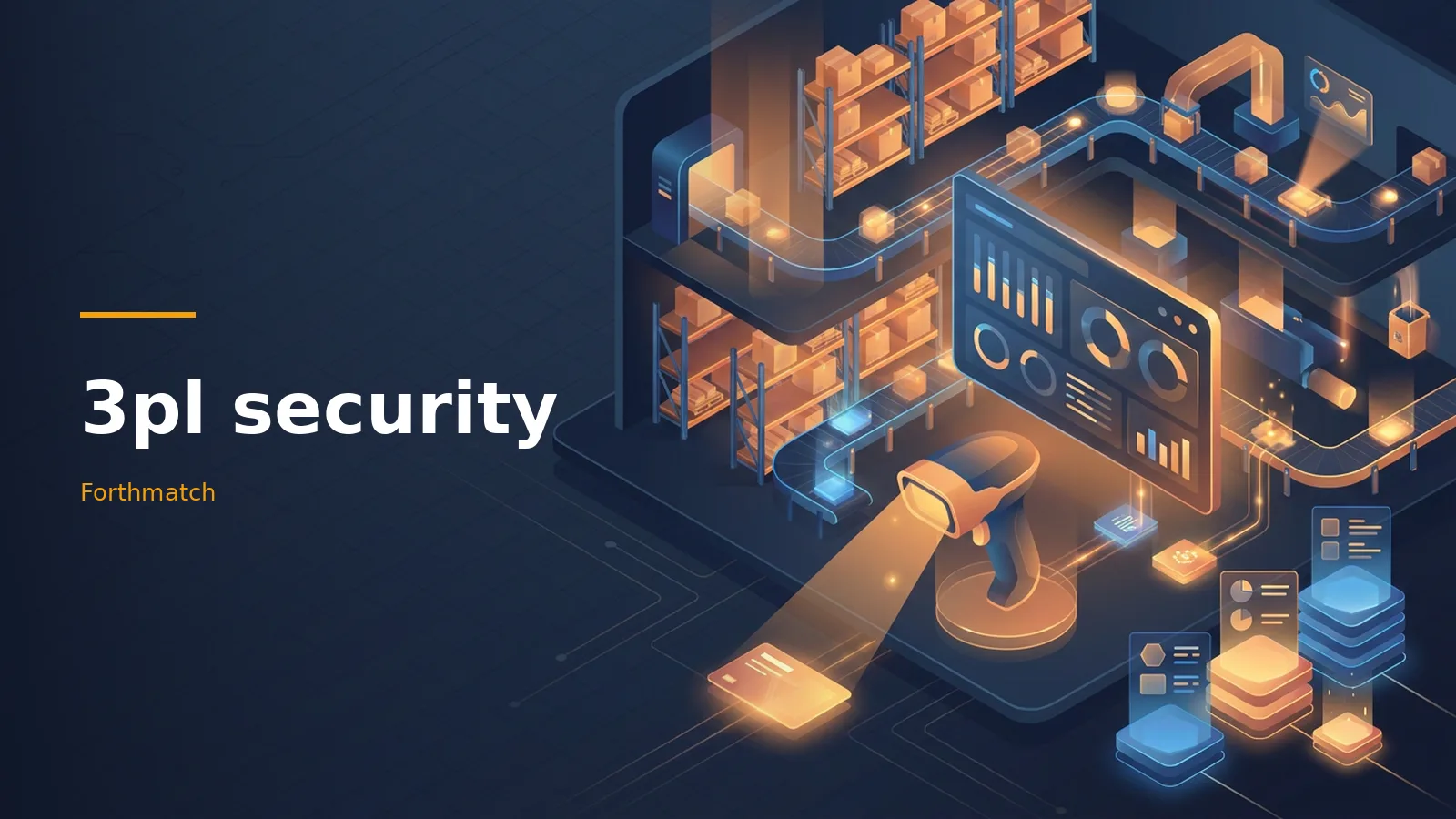
Logistics and 3PL security spans three risk surfaces: physical warehouse access, inventory shrinkage, and data.
Hylke Reitsma is co-founder of Forthsuite and a supply chain specialist with 8+ years of hands-on experience at Shell, Verisure, and Stryker. He holds an MSc in Supply Chain Management from the University of Groningen and writes practical guides to help e-commerce teams run leaner, faster supply chains. Selected by Replit as 1 of 20 founders for the inaugural Race to Revenue Cohort #1 (2026) and certified as a Replit Platform Builder.
3PL Relationship Risk Scorecard
Answer 4 quick questions to see your exposure level to fulfillment risks.
1. How often do you audit your 3PL's inventory accuracy?
3PL Security: Physical, Inventory and Data Risk Explained
Quick answer: The biggest risks in using a 3PL come down to losing visibility and control of something customers judge you on. Slow or inconsistent shipping, inventory inaccuracies, damage in handling, weak data security, and capacity that buckles at peak can all surface as your problem — which is why the mitigation for most of them is the same: measure the partner's performance continuously.
TL;DR: 3PL risks — slow shipping, inventory errors, damage, security gaps, peak capacity — all trace back to lost visibility, and the fix is continuous measurement. Forthmatch is free 3PL performance-monitoring software for Shopify, tracking fulfilment success rate, processing time, and SLA compliance so risks surface early.
Last updated: July 2026
Quick answer: The biggest risks in using a 3PL come down to losing visibility and control of something customers judge you on.
- 3PL risks include slow shipping, inventory errors, damage, security gaps, and peak capacity
- Most show up as your problem because the customer judges your brand
- Lost visibility into the partner is the common thread
- Continuous performance measurement is the shared mitigation
What 3PL Security Means: Systems, Protocols and Facility Controls
The phrase "3PL security" defines how a third-party logistics partner protects a merchant's assets. This is not a single feature but a combination of three distinct security pillars: physical, inventory, and data.
A failure in any one of these areas can result in direct financial loss, customer dissatisfaction, and long-term damage to your brand.
Understanding this concept is the first step to holding your fulfillment partner accountable. It moves the conversation from a simple cost-per-order discussion to a risk management evaluation. For an operator, this means asking specific questions about processes and protections, not just accepting vague assurances of safety.
Pillar 1: Physical Security
Physical security involves the measures used to control access to the warehouse and protect the building itself. This is the most visible layer of a 3PL's security posture. It is designed to prevent unauthorized entry and deter external threats.
Key components include:
- Perimeter Security: Fencing, gates, and clear demarcation of the property.
- Access Control: Keycard or biometric systems that log every entry and exit. Visitor access should be strictly controlled and logged.
- Surveillance: 24/7 video monitoring (CCTV) with coverage of all entrances, exits, docks, and high-value storage areas.
- On-Site Staff: The presence of security guards, either during operating hours or around the clock, depending on the facility's risk profile.
- Employee Screening: Background checks for all warehouse employees to screen for criminal history that could pose a risk to inventory.
When evaluating a 3PL, ask to see these systems in action. A refusal or hesitation is a significant red flag.
Pillar 2: Inventory Security
Inventory security focuses on the processes that prevent loss, theft, and damage to your products once they are inside the warehouse. This is about operational discipline, not just locks and cameras. A 3PL with poor inventory security will have high rates of shrinkage, which is the unexplained loss of stock.
Effective inventory security relies on:
- Inventory Control Systems: Regular cycle counts and full physical inventory counts to quickly identify discrepancies between the warehouse management system (WMS) and physical stock.
- Secure Storage: Use of locked cages or dedicated, access-controlled zones for high-value products like electronics, jewelry, or pharmaceuticals.
- Process Audits: Documented procedures for receiving, stowing, picking, packing, and shipping. These processes should be audited regularly to prevent internal theft or procedural errors that lead to loss.
- Damage Prevention: Proper training for staff on handling products, appropriate storage methods (e.g., avoiding stacking heavy items on fragile ones), and a clean, organized facility.
Your 3PL's shrinkage rate is a key performance indicator. A rate consistently above 1% is a sign of systemic problems in their inventory security processes.
Pillar 3: Data Security
Data security is the protection of all digital information related to your business and your customers. In an e-commerce operation, a 3PL handles a massive amount of sensitive data, including customer names, shipping addresses, and order histories. A breach of this data can be more damaging than the loss of physical inventory.
Core elements of 3PL data security are:
- Network Security: Firewalls, intrusion detection systems, and secure Wi-Fi to protect their internal network from cyberattacks.
- Data Encryption: Encryption of data both in transit (as it moves between your Shopify store and their WMS) and at rest (while stored on their servers).
- Compliance and Certifications: Adherence to standards like SOC 2 (Service Organization Control 2), which audits a provider's systems for security, availability, and confidentiality.
- Access Controls: Role-based access to data, ensuring that employees can only see the information necessary to perform their jobs.
- Breach Response Plan: A documented, tested plan for how the 3PL will notify you and respond in the event of a data breach.
Ask potential 3PLs for their SOC 2 Type II report. This document provides an independent auditor's opinion on the effectiveness of their security controls over a period of time, not just on a single date.
Safety and Security Risks Associated With Using a 3PL
Security is one risk category among several. When you outsource fulfilment you keep the customer relationship but hand over the execution — and every gap between those two is a risk you still own.
| Risk | How it shows up | How to mitigate it |
|---|---|---|
| Inventory accuracy & shrinkage | Their count and your store's count drift apart; you oversell what isn't there | Cycle-count requirements and a shrinkage threshold written into the contract, not assumed |
| SLA misses at peak | Fine in March, late in November — when it costs the most | Peak-season SLAs with named consequences; ask what they turned away last Q4 |
| Capacity competition | You share the warehouse with bigger clients who get the labour first | Understand where you rank by volume before signing; ask who their largest client is |
| Integration & data quality | Order and tracking syncs break quietly; support finds out from customers | Test the integration under failure, not just happy path; alert on sync gaps |
| Lock-in & switching cost | Leaving means moving physical stock — so bad service gets tolerated | Cap the notice period, agree exit/transfer terms up front, keep your data portable |
| Brand experience | Their packing and their mistakes arrive with your logo on the box | Document packaging standards; audit real orders you place yourself |
| Liability gaps | Damage or loss is capped far below the value of the goods | Read the cap before the rate card — see below |
3PL: Who Has the Risk?
Mostly you. This surprises people, so it is worth stating plainly: in a typical 3PL arrangement title to the goods stays with you — the 3PL is a bailee handling your property, not the owner of it. The practical consequences follow from that:
- Loss or damage in the warehouse: the 3PL's liability is commonly limited by the master service agreement, often to a low fixed amount per unit or per pallet, or to a multiple of the storage fee — not to what the stock is actually worth. Insuring the goods for their real value is generally your responsibility.
- The customer's experience: entirely yours. A late or wrong delivery is a chargeback and a review against your brand, whoever picked it.
- Regulatory and product compliance: stays with you as the seller of record.
- What the 3PL genuinely carries: operational performance against the SLA — and the remedy is usually a service credit, which rarely covers the commercial damage of a missed peak.
None of this is a reason to avoid a 3PL; it is a reason to read the master service agreement with the same attention you give the rate card. The cap, the notice period, and the insurance clause decide what you are actually exposed to — and they are all negotiable before you sign, and never after. Check yours, and confirm cover with your own insurer rather than assuming the warehouse carries it.
Why it matters in 2026
Choosing a 3PL based on the lowest cost-per-pick is a direct tradeoff against security. By 2026, the consequences of that tradeoff are no longer theoretical.
The rising cost of inventory shrinkage, the financial and reputational damage of a data breach, and heightened customer expectations make 3PL security a primary business concern, not a secondary one.
A single security failure can erase years of brand building. For example, a pattern of "lost" packages due to internal theft at your 3PL quickly translates into negative reviews and customer service tickets. A breach of customer data can trigger regulatory fines and destroy customer trust permanently. According to IBM's 2023 report, the global average cost of a data breach reached $4.45 million, a figure that continues to climb.
In the current market, fulfillment is part of the customer experience. Customers expect their orders to arrive quickly, accurately, and securely. A failure at the fulfillment stage is a failure of your brand. Ongoing performance monitoring is the only way to ensure your 3PL partner consistently meets the standards you agreed to. Tools like Forthmatch track fulfillment speed and flag SLA violations, giving you the data needed to identify operational weaknesses before they become critical security risks or brand liabilities.
How to get started
Evaluating and securing a partnership with a security-conscious 3PL is a systematic process. It requires moving beyond the sales presentation and into a detailed, evidence-based audit.
Follow these steps to protect your business.
- Define Your Security Profile
- Create a Security-Focused Request for Proposal (RFP)
- Conduct a Thorough Site Visit
- Scrutinize the Master Service Agreement (MSA)
Step 1: Define Your Security Profile
Not all products carry the same risk. Before you can evaluate a 3PL, you must first define your own security needs. This profile will guide your questions and non-negotiable requirements.
Answer these questions:
- Product Value: Are you selling high-value, easily resold items like electronics or designer goods? If so, you need a 3PL with caged storage and strict inventory controls.
- Product Size: Are your products small and easily concealed? This increases the risk of internal theft.
- Customer Data: Do you collect sensitive customer information beyond name and address? Your data security requirements will be higher.
- Regulatory Constraints: Do you sell products in regulated industries like supplements, food, or cosmetics? Your 3PL must demonstrate compliance with FDA or other relevant regulations.
Your answers create a risk matrix. A business selling high-value electronics has a high-risk profile and needs a 3PL with top-tier physical and inventory security. A business selling branded t-shirts has a lower risk profile but still requires strong data security.
Step 2: Create a Security-Focused Request for Proposal (RFP)
Your RFP is your primary tool for vetting potential partners. Do not rely on a 3PL's generic marketing materials. Instead, force them to respond to specific questions about their security protocols. Your RFP should include a dedicated security section.
Include questions like these:
| Security Pillar | Sample RFP Questions |
|---|---|
| Physical Security |
|
| Inventory Security |
|
| Data Security |
|
When you are ready to find a new partner, put your real order data into the free 3PL RFP template so the operational and pricing proposals you receive are based on your actual fulfillment patterns, and append this security questionnaire to create a complete evaluation package. Forthmatch itself does not generate RFPs or request quotes; it monitors the 3PL you already use.
Step 3: Conduct a Thorough Site Visit
Never sign a contract without first visiting the facility that will hold your inventory. If an in-person visit is not possible, insist on a detailed, live video tour. During the visit, you are looking for evidence that backs up their RFP answers.
Look for:
- Cleanliness and Organization: A messy, disorganized warehouse is a sign of poor processes, which often leads to lost or damaged inventory.
- Visible Security Measures: Can you see the cameras? Are secure areas clearly marked and locked? Do employees wear badges?
- Employee Conduct: Do employees seem professional and follow procedures? Or are there unsecured products sitting on docks and in hallways?
- The "Feel" of the Place: Trust your operational gut. If the facility feels chaotic or unprofessional, it probably is.
Step 4: Scrutinize the Master Service Agreement (MSA)
The contract is the final and most important document. Pay special attention to the sections on liability and limitation of liability. A standard 3PL contract is written to protect the 3PL, not you.
Key clauses to review with a lawyer:
- Limitation of Liability: This is the most critical clause. Many 3PLs cap their liability for lost or damaged goods at a low number, such as $50 per box or the cost of the fulfillment fee. If you sell a $1,000 item and they lose it, you may only be able to recover $50. You must negotiate this cap to reflect the actual value of your goods.
- Inventory Shrinkage Allowance: Some contracts give the 3PL an "allowance" for lost inventory (e.g., 0.5%) before they are held financially responsible. Argue to reduce or eliminate this allowance. You should not have to pay for their operational failures.
- Data Breach Responsibility: The contract should clearly state the 3PL's responsibility to notify you of a breach and cover associated costs, such as credit monitoring for your customers.
Negotiating these terms is not adversarial; it is standard business practice. A good partner will be willing to work with you to create a fair agreement.
Common pitfalls
Many Shopify merchants make predictable mistakes when selecting and managing a 3PL partner. Avoiding these common pitfalls is as important as following the right steps.
Pitfall 1: Accepting the Standard Liability Cap
The most frequent and costly mistake is failing to negotiate the "Limitation of Liability" clause in the MSA. A 3PL's standard contract will cap their financial responsibility for lost or damaged inventory at a fraction of its actual value. For a merchant selling high-value goods, this can be a business-ending mistake.
Example: A Shopify store sells jackets for $800. Their 3PL loses a carton containing 10 jackets, a total value of $8,000. The MSA's liability clause caps reimbursement at "$50 per lost carton." The merchant absorbs a $7,950 loss. This is not a theoretical risk; it happens every day. You must negotiate a liability cap that reflects your product's cost of goods, not a generic, low-ball number.
Pitfall 2: Confusing a Certification with Ongoing Security
Certifications like SOC 2 or TAPA (Transported Asset Protection Association) are valuable indicators of a 3PL's commitment to security. However, they are point-in-time audits. A 3PL can be compliant on the day of the audit and let standards slip the next month. Security is a continuous practice, not a one-time achievement.
This is where ongoing performance tracking becomes critical. By using a tool like Forthmatch to monitor fulfillment speed and accuracy, you can spot trends that indicate a decline in operational discipline. A sudden spike in mis-picks, shipping delays, or orders marked as fulfilled but never shipped are all symptoms of process decay. This data allows you to hold your 3PL accountable to the standards they were certified for, not just once a year, but every week.
Pitfall 3: Overlooking Data Security
Merchants are often so focused on preventing the physical loss of inventory that they neglect the invisible risk of a data breach. Your customer list and their order history are valuable assets. In the hands of a competitor or a malicious actor, this information can be used to steal your customers or damage your reputation.
Your 3PL's WMS is directly connected to your Shopify store. A security vulnerability on their end is a vulnerability for your business. Insist on seeing their SOC 2 report and understanding their data protection policies. Ask how they handle employee access to your data and what their response plan is if a breach occurs. Do not assume they have it covered.
Pitfall 4: Failing to Plan for Disaster Recovery
Warehouses are physical locations subject to real-world risks like fires, floods, tornadoes, and extended power outages. A low-cost 3PL may operate out of a single facility with no backup plan. If that facility is taken offline, your fulfillment operations cease entirely.
Ask potential partners about their business continuity and disaster recovery plans. A mature 3PL will have redundant systems and potentially a network of facilities. They should be able to explain, in detail, how they would continue to fulfill your orders in the event of a major disruption at their primary location. Your agreement should specify service level expectations during such an event.
Reading the strengths above
Weigh integration depth against onboarding time, published rates against what a worked invoice on your real order mix actually totals, and network breadth against how flexible a provider is on exceptions. The provider that wins on paper is often not the one that fits your order profile.
Frequently Asked Questions
What are the 3 main types of security in logistics?
The three main types of security in logistics are physical, inventory, and data security. Physical security protects the warehouse facility from unauthorized access. Inventory security involves processes to prevent product theft, loss, and damage. Data security protects sensitive customer and order information from cyber threats and breaches. A comprehensive 3PL security strategy addresses all three areas.
How do you evaluate the security of a 3PL warehouse?
Evaluate a 3PL's security through a multi-step process. Start with a detailed RFP asking specific questions about their security protocols. Review their certifications, such as SOC 2 for data or TAPA for physical security. Conduct an on-site visit to verify their claims and observe their operations. Finally, scrutinize the liability and security clauses in their service agreement before signing.
What is a TAPA certification in logistics?
TAPA (Transported Asset Protection Association) is a global organization that establishes security standards for supply chains. A TAPA certification indicates that a warehouse or logistics facility has been audited and meets specific minimum requirements for security, including perimeter controls, access monitoring, and employee screening. It is a strong indicator of a 3PL's commitment to preventing cargo theft.
Is SOC 2 compliance necessary for a 3PL?
While not legally mandatory, SOC 2 compliance is a critical standard for any 3PL handling e-commerce data. A SOC 2 report, especially a Type II report, demonstrates that a third-party auditor has verified the 3PL's controls for managing and protecting customer data. For a Shopify merchant, partnering with a SOC 2 compliant 3PL is a key step in mitigating data breach risks.
What is the biggest security risk in a warehouse?
The biggest security risk in a warehouse is often internal theft, which is a failure of inventory security processes. While external threats exist, a lack of proper inventory tracking, poor access controls, and inadequate employee screening can lead to significant, ongoing inventory shrinkage. This risk is often greater than the risk of a one-time external break-in because it can go undetected for long periods.
How does a 3PL handle data security?
A secure 3PL handles data security by implementing a layered defense. This includes network firewalls, data encryption for information in transit and at rest, and strict access controls so employees only see necessary data. They often prove their security posture by undergoing regular audits to achieve certifications like SOC 2, and they should have a clear, documented plan for responding to a data breach.
Holding your 3PL accountable for their performance is the only way to ensure the security standards you agreed to are being met. Forthmatch provides the tools to track fulfillment speed and flag SLA violations, giving you the objective data needed for productive accountability sessions. It is a free app, designed to give Shopify merchants control over their fulfillment operations.
What is the key takeaway about 3PL logistics risks?
Outsourcing logistics to a third-party provider (3PL) can streamline operations for direct-to-consumer (DTC) brands, but it comes with risks. Forthmatch tracks 3PL fulfilment success rate, processing time and SLA compliance for Shopify operators so brands can hold their fulfilment partners accountable.
What are the biggest risks when working with a third-party logistics provider?
The biggest 3PL risks include inventory mismanagement, shipping delays, poor communication, inadequate technology integration, hidden costs, quality control issues, and contract inflexibility. These challenges can lead to stockouts, customer dissatisfaction, and unexpected expenses. Understanding these risks upfront helps ecommerce businesses select the right logistics partner and establish proper safeguards through contracts, performance metrics, and regular audits.
How can I prevent inventory accuracy problems with my 3PL warehouse?
Prevent inventory issues by implementing real-time inventory synchronization between your ecommerce platform and 3PL systems, conducting regular cycle counts, establishing clear receiving and put-away procedures, and setting up automated alerts for discrepancies. Schedule quarterly physical audits and require your 3PL to use barcode scanning or RFID technology. Clear documentation of inventory handling processes and defined accountability metrics significantly reduce accuracy problems.
Why do shipping delays happen with 3PL providers and how do I avoid them?
Shipping delays occur due to warehouse capacity issues, poor labor management, inefficient pick-pack processes, carrier problems, or inadequate inventory positioning. Mitigate these by establishing service level agreements with penalties, monitoring fulfillment metrics daily, maintaining safety stock levels, using multiple fulfillment centers for geographic distribution, and implementing backup carrier options. Regular performance reviews help identify bottlenecks before they impact customers.
What should I include in a 3PL contract to protect my business?
Include clearly defined performance metrics, liability clauses for lost or damaged inventory, transparent pricing structures with all fees itemized, termination clauses with reasonable notice periods, data security requirements, insurance coverage minimums, and dispute resolution procedures. Specify service level agreements for order accuracy, shipping times, and response times. Include provisions for seasonal volume fluctuations and technology integration requirements to ensure operational flexibility.
How often should I review my 3PL provider's performance?
Review key performance indicators weekly through dashboards tracking order accuracy, fulfillment speed, and inventory levels. Conduct formal monthly performance reviews analyzing trends, addressing issues, and discussing improvements. Schedule comprehensive quarterly business reviews covering financials, strategic alignment, and scalability planning. Annual reviews should reassess the partnership's overall value and competitiveness. This multi-layered approach ensures continuous improvement and early identification of potential problems.
How do I mitigate 3PL security risks?
To 3PL Security Risks: 7 Mitigation Strategies, outsourcing logistics to a third-party provider (3PL) can streamline operations for direct-to-consumer (DTC) brands, but it comes with risks. Forthmatch tracks 3PL fulfilment success rate, processing time and SLA compliance for Shopify operators so brands can hold their fulfilment partners accountable.
What are the best ways to ensure smooth technology integration with a 3PL provider?
To make technology integration with a 3PL provider as smooth as possible, start by focusing on open and clear communication. Work with your provider to define shared KPIs that promote transparency and ensure both parties are aligned on goals. Pinpoint critical integration points, such as order management, inventory updates, and shipping notifications, to ensure data flows smoothly and avoids any hiccups.
Take a close look at the provider’s tech capabilities. This includes features like real-time tracking, warehouse management systems, and tools that enhance supply chain visibility. Choose a provider whose systems align well with your existing platforms and who offers strong onboarding support and troubleshooting assistance. These steps can help simplify the integration process and boost your operational efficiency.
How can DTC brands protect sensitive data when partnering with a 3PL provider?
When collaborating with a 3PL provider, protecting sensitive data should be a top priority for DTC brands. Look for providers that have strong cybersecurity protocols in place. This means they should conduct regular security audits, use encryption to safeguard data, and have a clear incident response plan ready in case of a breach.
It's also crucial to verify that the 3PL complies with data protection laws like the CCPA and GDPR, even if your business mainly operates in the U.S. Taking the time to review their security measures and performing your own risk assessments can add an extra layer of protection for your supply chain and customer data.
Addressing these security concerns upfront helps reduce risks and ensures a safer, more reliable partnership with your 3PL provider.
How can I avoid unexpected costs and hidden fees when working with a 3PL provider?
To steer clear of surprise expenses and hidden charges when working with a 3PL provider, start by thoroughly examining their pricing structure and contract terms. Ask for a detailed breakdown of all possible fees, such as storage, labor, handling, and any additional surcharges. Requesting a sample invoice can also give you a clearer picture of potential hidden costs.
Keep communication lines open with your provider and make sure all agreements are well-documented. It's also a good idea to periodically review the contract for clauses that might lead to extra charges down the line. Taking these steps and focusing on transparency can help you keep your logistics budget in check and avoid unexpected financial headaches.
3PL Security Compliance Standards: What to Verify
3PL security, in plain terms, means the systems and controls a logistics provider uses to protect your inventory and data — physical warehouse security, access controls, and the IT safeguards around orders and EDI. Commonly requested 3PL security compliance standards include SOC 2 for data handling, C-TPAT for supply chain security, and ISO 27001 for information security, alongside the insurance and audit rights covered above.
Ask for current certificates rather than policy summaries, and re-verify at renewal: compliance lapses show up as risk before they show up as losses. Forthmatch tracks your existing 3PL's performance record so security and SLA conversations happen on evidence.
About the Author

Hylke Reitsma is co-founder of Forthsuite and a supply chain specialist with 8+ years of hands-on experience at Shell, Verisure, and Stryker. He holds an MSc in Supply Chain Management from the University of Groningen and writes practical guides to help e-commerce teams run leaner, faster supply chains. Selected by Replit as 1 of 20 founders for the inaugural Race to Revenue Cohort #1 (2026) and certified as a Replit Platform Builder.
LinkedIn